
2-IN-1 SHORTS · COMPRESSION SHORTS · SPATS
Compression Liner Knit for 2-in-1 Shorts
A smooth inner layer. A fit developed around movement.
Build a close-fitting knit layer for custom MMA shorts, gym shorts and coordinated activewear. Select the surface, stretch, coverage and seam direction together with the finished garment.
Discuss your liner specification →Materials and performance are confirmed by physical swatch, garment sample and any required testing.
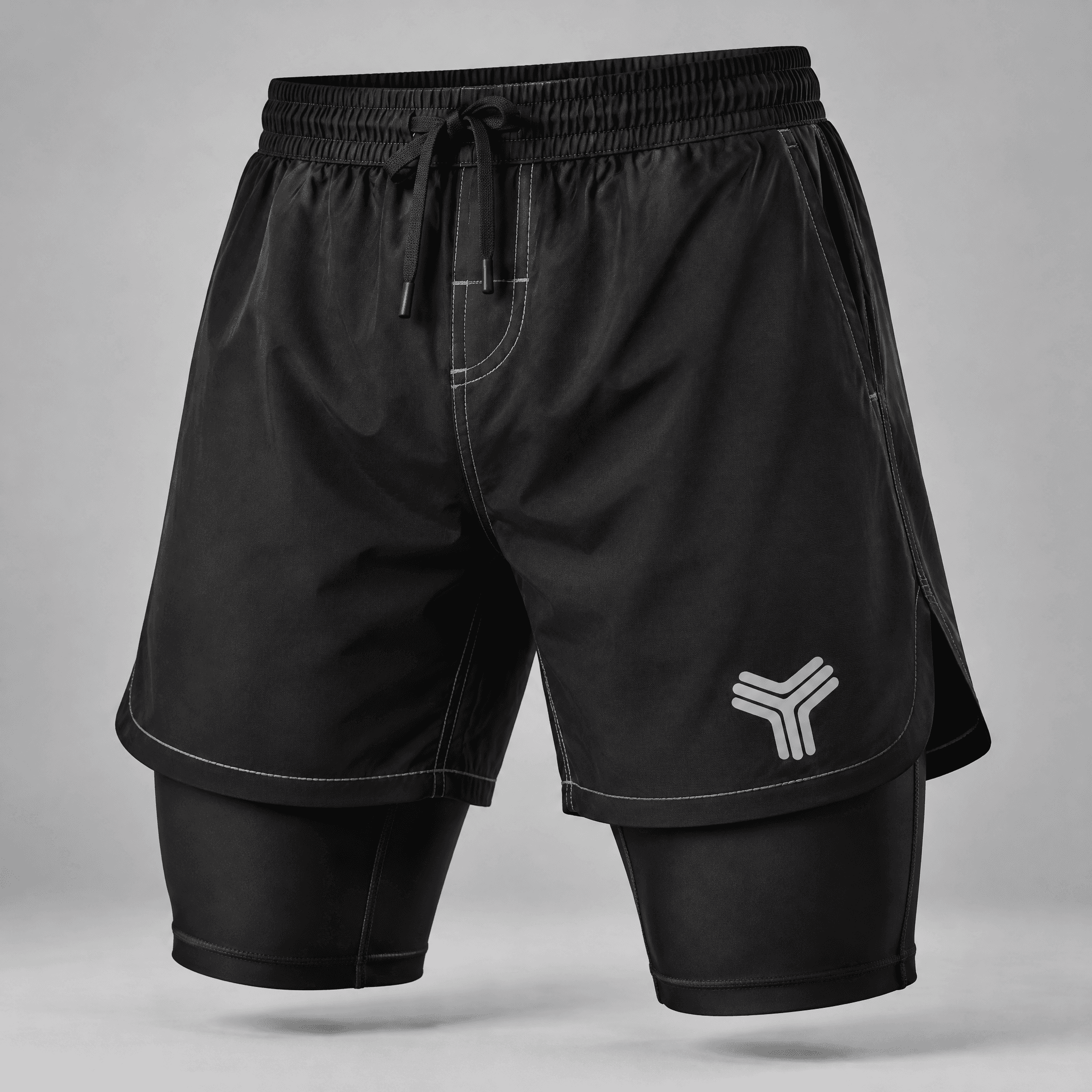
FABRIC IDENTITY
Define the knit before defining the claim.
Compression liner knit describes an application and fit direction, rather than one fixed composition. Use these development points to organize your sourcing brief.
| Fabric family | Stretch knit for fitted inner layers; warp-knit or weft-knit construction is selected against the intended garment. |
|---|---|
| Fiber development direction | Polyester or nylon blended with elastane. A 12–18% elastane target can be discussed; the final blend must be confirmed for the selected swatch. |
| Weight development direction | 180–220 GSM can be used as a starting brief, subject to swatch availability and fit trials. This is not a confirmed specification for the pictured concept. |
| Surface and hand feel | A smooth, close-knit, matte or semi-matte direction, selected for soft skin contact. Confirm actual texture and finish on a physical swatch. |
| Fit and coverage | Close-to-body liner length, opacity, stretch direction and seam placement are approved on a worn garment sample. |
| Optional garment details | Flatlock or other suitable low-profile seams, inner-leg panels, extended liner length, custom artwork and a fitted thigh pocket can be developed separately. |
| Performance checks | Test stretch and recovery, moisture management, drying time, pilling, colorfastness and wash dimensional stability as required by the project. |
| Visual references | Supplied AI-generated concept images illustrate surface, layering and training use; they are not test reports or photographs of an approved production sample. |
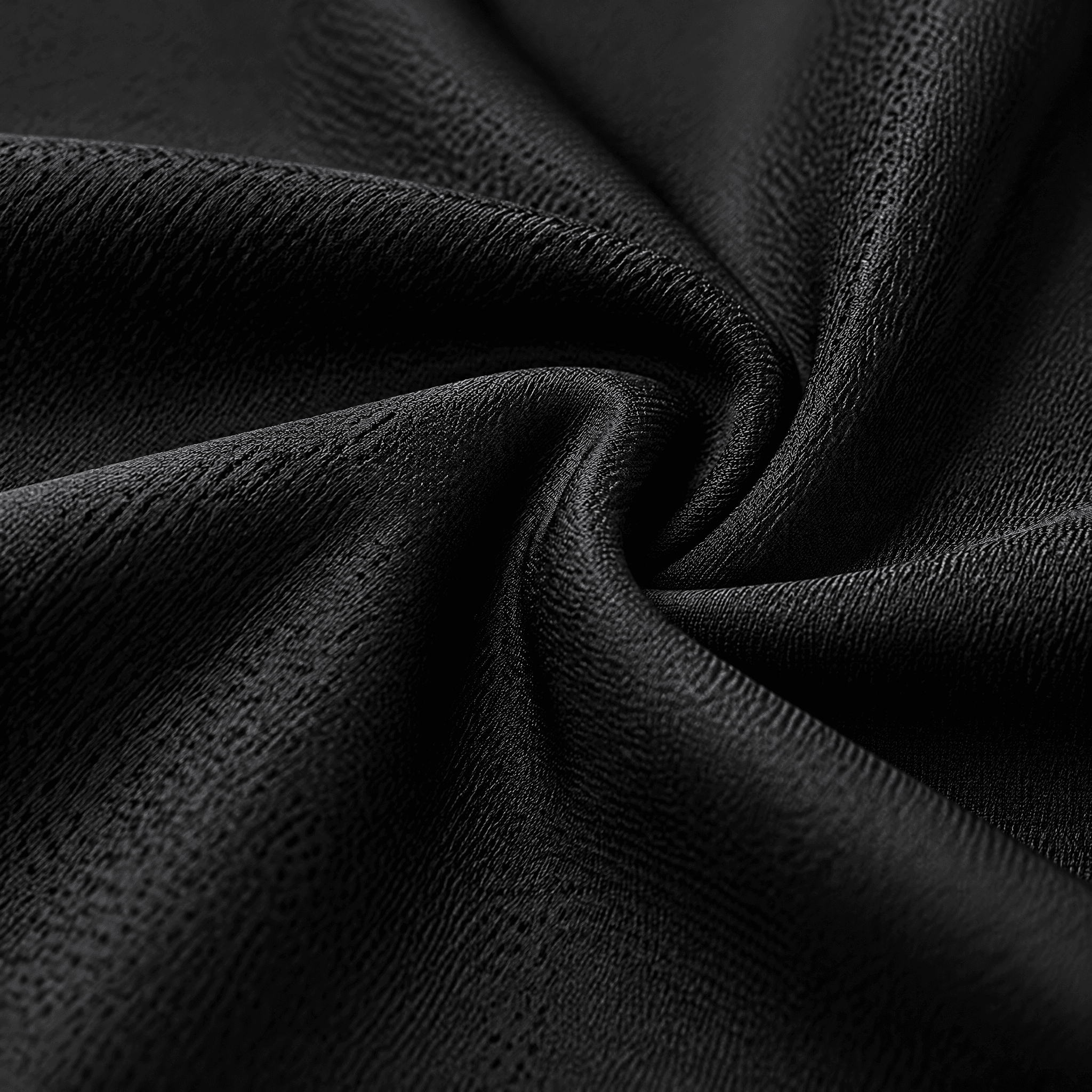
SURFACE · STRETCH · RECOVERY
Start with how the fabric feels and moves.
Look for a smooth, close-knit contact surface with a matte or subtle-sheen finish. Compare hand feel, thickness and coverage in the color you plan to order.
- Review stretch across both fabric directions.
- Check recovery after repeated extension.
- Inspect opacity while the liner is stretched.
- Compare seam softness and leg-opening comfort.
Stretch percentage, pressure level and wash performance cannot be measured from these images. Specify the test method and acceptance target when requesting performance data.
WEAR & DEVELOPMENT PRIORITIES
Four details to approve on the finished sample.
Smooth skin-contact direction
Choose a soft surface and low-profile seams to help reduce rubbing at contact points. Comfort depends on fit, seam finish, sweat and the individual wearer.
Close fit through movement
Coordinate stretch and recovery with the pattern so the liner follows squats, lunges and kicks. Compression level depends on both fabric and garment sizing.
Moisture-management development
Specify wicking and drying targets when they matter to your market. Fiber choice, knit structure and finishing affect the result; verify claims through testing.
Recovery after wear and washing
Review waistband attachment, leg opening and recovery after repeated extension and laundering. Approve your care instructions against the selected fabric.
MATERIAL TO GARMENT
See the surface, stretch direction and layered use together.
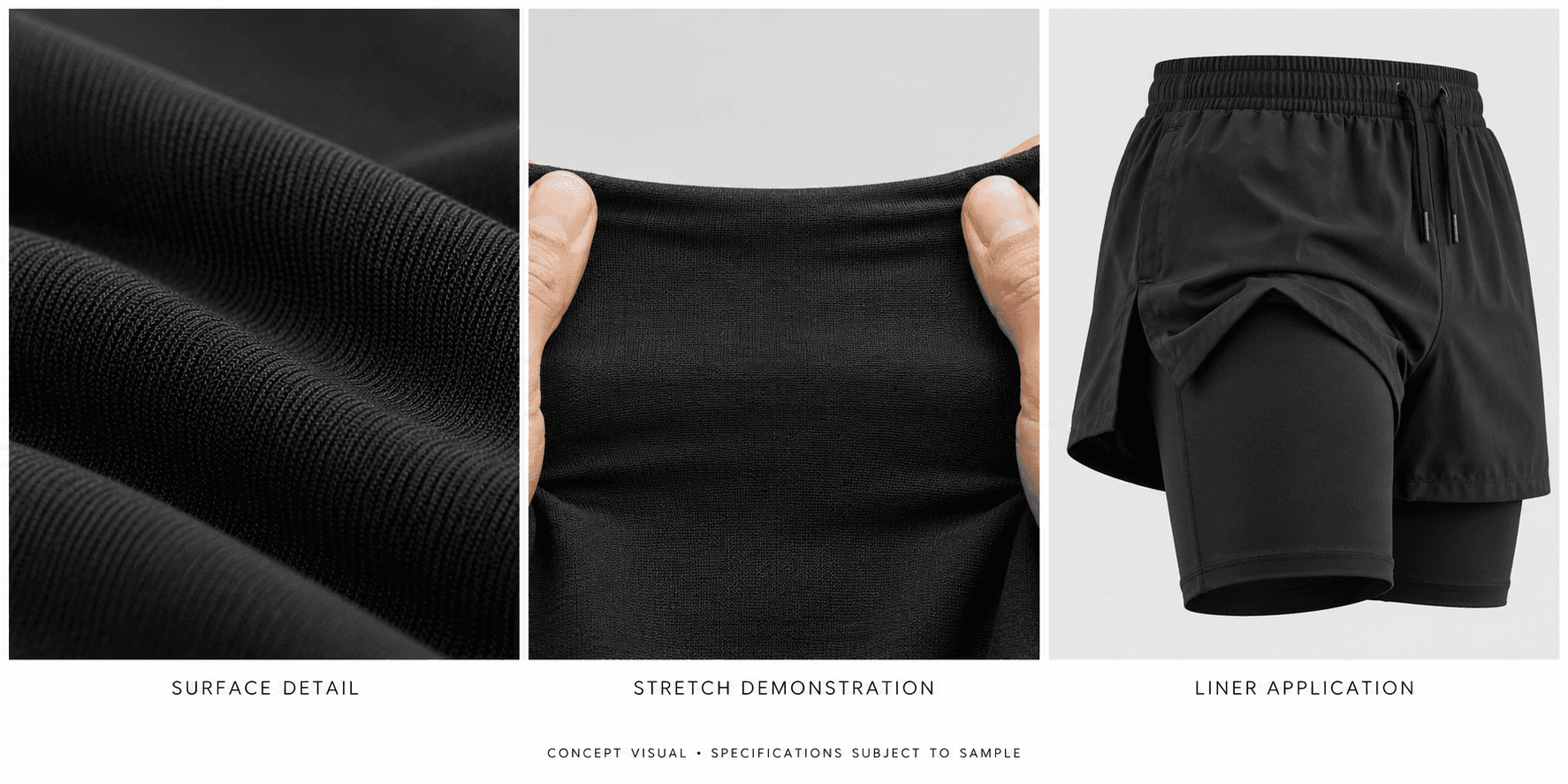
2-in-1 MMA & training shorts
A woven outer shell provides the garment silhouette and split direction. A fitted knit inner layer provides coverage and a soft contact surface. Confirm shell and liner lengths together.
Inspect the 2-in-1 product reference →Compression shorts & No-Gi spats
Develop a standalone fitted layer for training, with the intended coverage, stretch, seam layout and sizing approved on the wearer.
Read the liner construction guide →Optional fitted thigh pocket
A stretch pocket can be added during pattern development. Confirm device dimensions, retention, seam placement and suitability for the intended activity; the supplied concepts do not demonstrate this option.
Discuss a pocket and pattern brief →MOVEMENT & FIT REVIEW
Approve the fit in the movements your buyers train for.
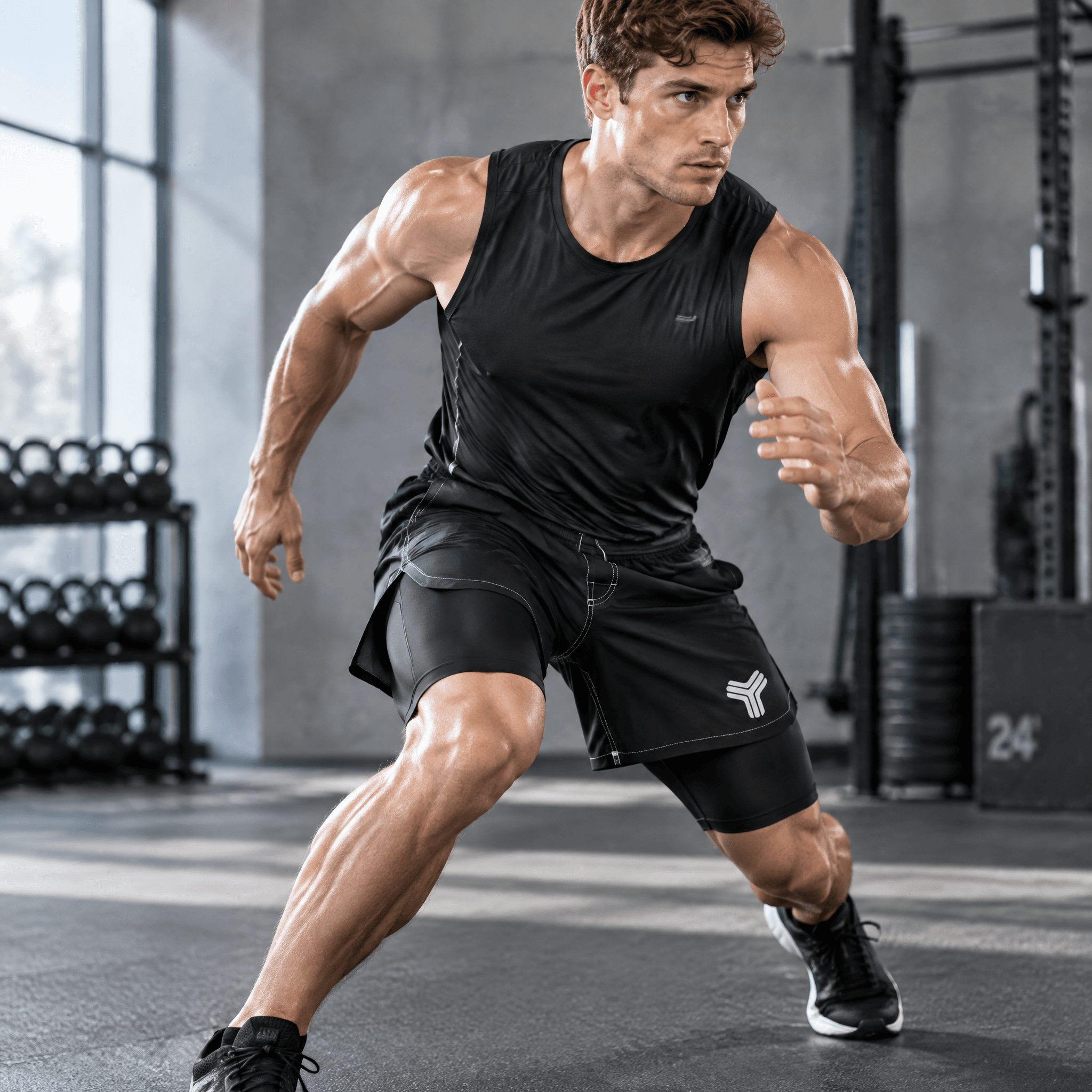
Use squats, lunges and controlled kicking movements to check liner length, coverage, leg-opening pressure and the connection between the outer shorts and inner layer.
The pattern, fabric, seams and size grading work together. Agree on an acceptable fit and record revisions before moving to bulk production.
Read the liner construction guide →The supplied training image is an AI-generated styling concept, not a product performance test or customer case.
BUYER QUESTIONS
Confirm the specification before sampling.
What is compression liner knit?
It is a stretch-knit fabric direction for close-fitting inner shorts, compression shorts or spats. The fabric is selected together with the garment pattern, seam layout and required coverage.
Are 180–220 GSM and 12–18% elastane confirmed specifications?
No. These are development ranges supplied for discussion. The selected swatch, fiber blend, weight and finished garment must be confirmed before they become order specifications.
Is this the same as the 250 GSM milk-silk inner layer?
Not necessarily. The separate high-split sample reference specifies a 250 GSM milk-silk inner fabric. That trade description and weight do not establish the composition or performance of another liner knit.
Does the fabric guarantee muscle recovery or prevent chafing?
No medical recovery, blood-flow, fatigue-reduction or guaranteed chafing-prevention claims are made. Pressure level, comfort, moisture handling and stretch performance need product-specific evaluation.
Can the liner include flat seams, artwork or a phone pocket?
These are optional OEM / ODM development choices. Confirm the seam method, print compatibility, pocket dimensions, placement and sample fit for your project.
How do I start a custom liner project?
Send the outer-short reference, estimated quantity, size range, liner length, intended activity, artwork and delivery target. TONTON will review swatch options and sample requirements.
BUILD YOUR OEM / ODM BRIEF
Tell us what the inner layer needs to do.
Share your garment reference, quantity, size range, liner length, seam and pocket preferences, artwork and delivery target.