
RASH GUARDS · FIGHTWEAR · VENTILATION INSERTS
Stretch Mesh for Zoned Ventilation
Open-knit panels. A garment built around movement.
Develop localized ventilation inserts for custom rash guards, fitted training wear and selected shorts constructions. Review the mesh together with the main fabric, panel position and connecting seams.
Plan your mesh panel specification →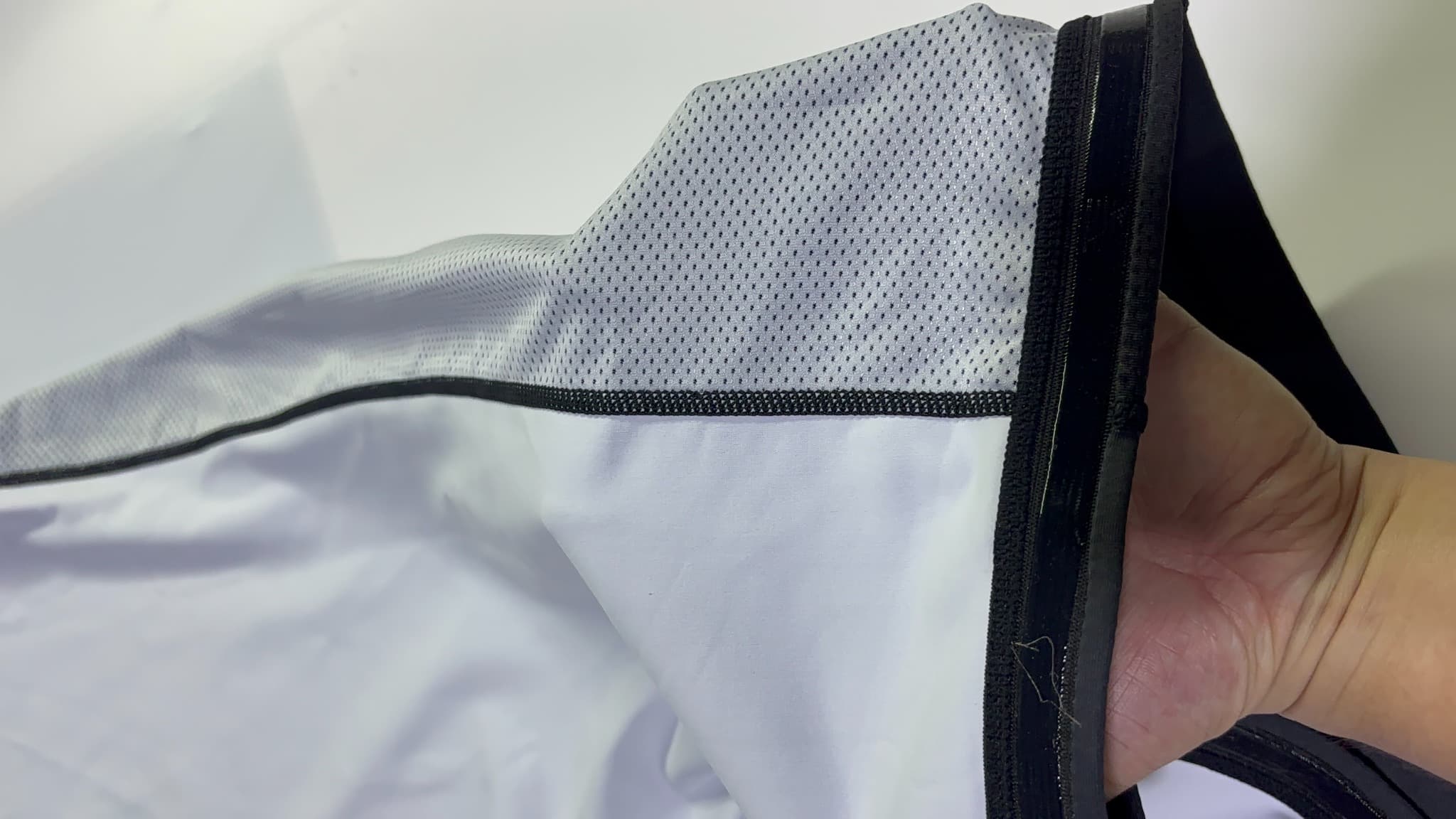
MATERIAL IDENTITY
Specify the insert separately from the main fabric.
An open structure is visible in the supplied material. Exact fiber content, weight, stretch, air permeability and durability are confirmed with the selected swatch and garment sample.
| Material direction | Stretch mesh for garment inserts and ventilation panels. Warp-knit construction is a development option; confirm the actual knit with the chosen supplier swatch. |
|---|---|
| Composition brief | Polyester or nylon with elastane. The supplied 85–90% base-fiber / 10–15% elastane ranges are discussion targets, not a confirmed blend for the photographed sample. The final blend must total 100%. |
| Weight brief | 120–150 GSM is a proposed selection range. Verify the selected swatch weight before adding it to an order specification. |
| Surface and openings | The supplied close-ups show small repeated openings, adjoining dense fabric and stitched panel boundaries. Opening shape, density and finish are confirmed on the actual swatch. |
| Stretch compatibility | Compare extension and recovery in both directions with the adjoining garment fabric. No numerical stretch or recovery rating has been supplied. |
| Placement | Underarm and side-panel routes for rash guards; gussets or liner ventilation strips can be developed separately for selected shorts patterns. |
| Wear and durability checks | Evaluate skin-contact feel, opacity under stretch, seam comfort, snagging, abrasion, tear behavior and wash stability for the intended sport. |
| Evidence status | Five supplied garment photos and one sample-inspection clip show visible construction. The separate brand film is an illustrative presentation, not a laboratory test. |
REAL MATERIAL & SEAM DETAILS
Look closely at the openings and the joins.
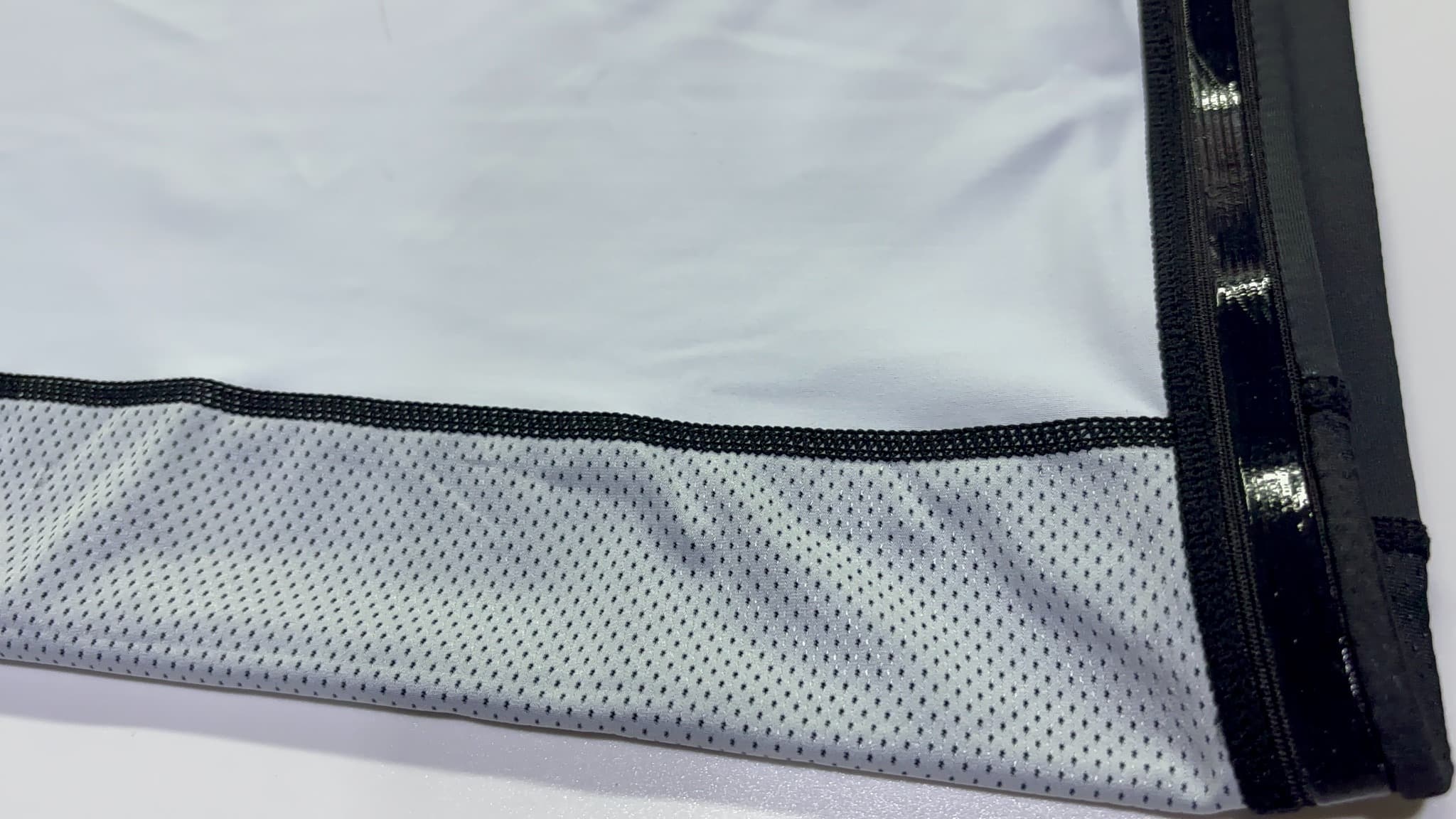
Mesh openings and the connecting seam
Review the transition from open-knit insert to dense garment fabric, including the stitch line and panel edge.
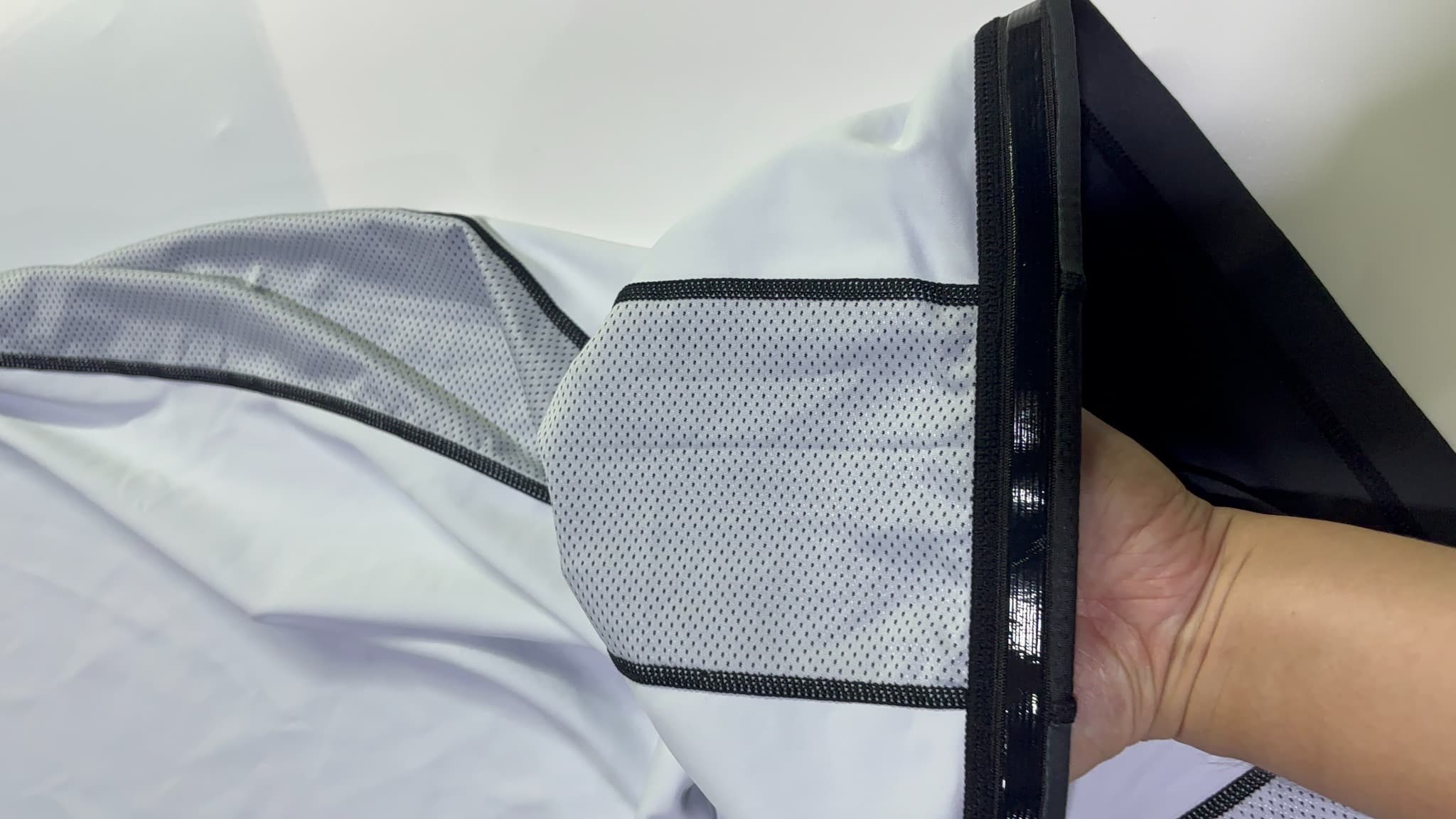
A held-open garment panel
The supplied photo helps discuss panel layout and coverage. It does not measure stretch percentage, air permeability or recovery.
SAMPLE INSPECTION / ORIGINAL FOOTAGE
Inspect the garment construction in motion.
The sample clip shows the garment panel, connecting seams and hem finishing. Use the moving view to discuss where the insert begins and ends, and how it meets the surrounding fabric.
- Check the mesh-to-main-fabric stitch line.
- Review seam intersections and edge finishing.
- Confirm panel coverage and comfort on a worn sample.
- Evaluate snagging and abrasion for the intended sport.
The elastic hem band shown in the sample is a separate component. Its grip, composition and function are specified independently of the mesh insert.
Review the rash guard construction guide →GARMENT PLACEMENT
Connect the panel location to the garment use.
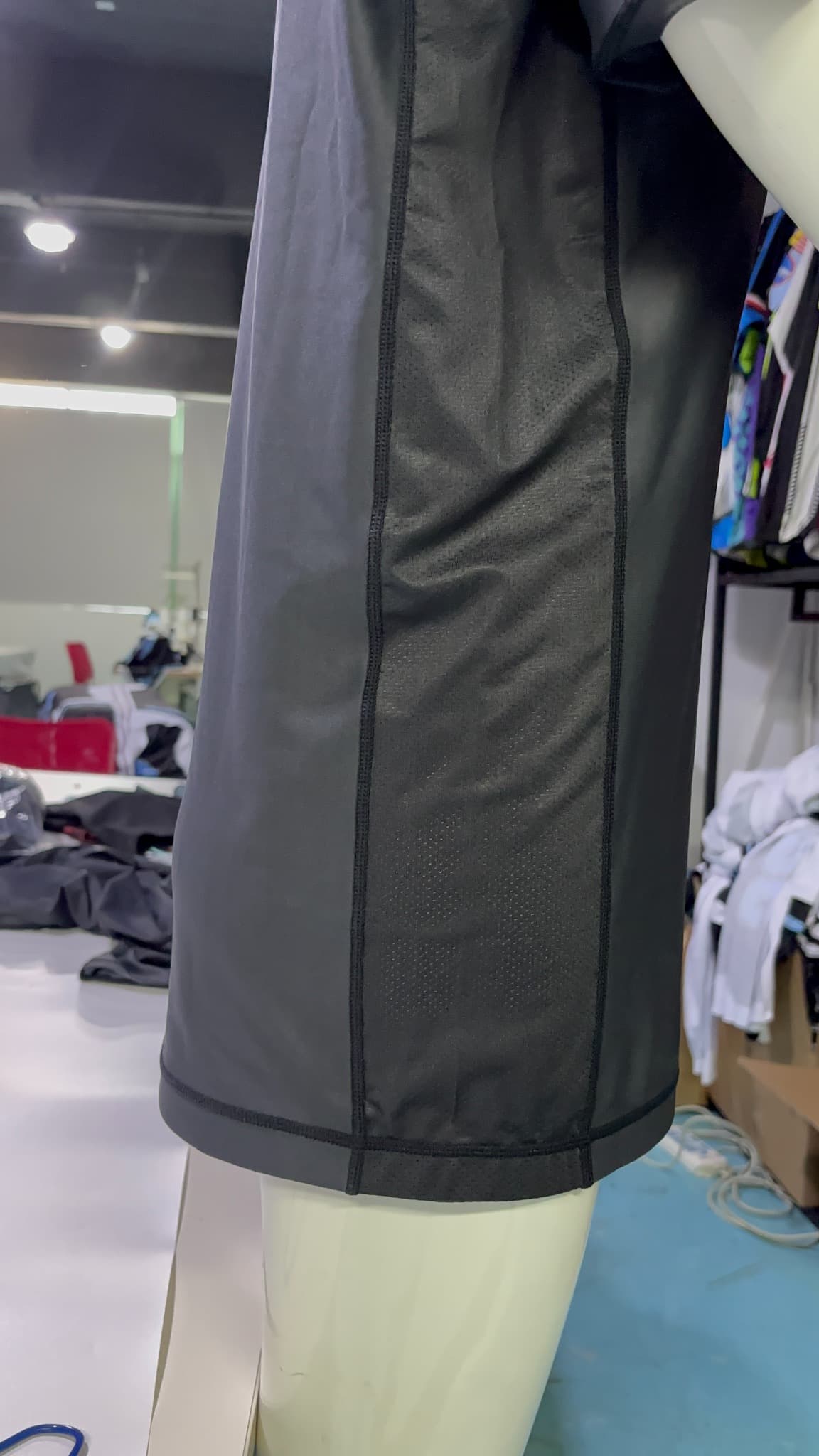
Outer view: side-panel placement
The darker insert runs between stitched boundaries on the garment. Review the panel width and intended coverage with your pattern.
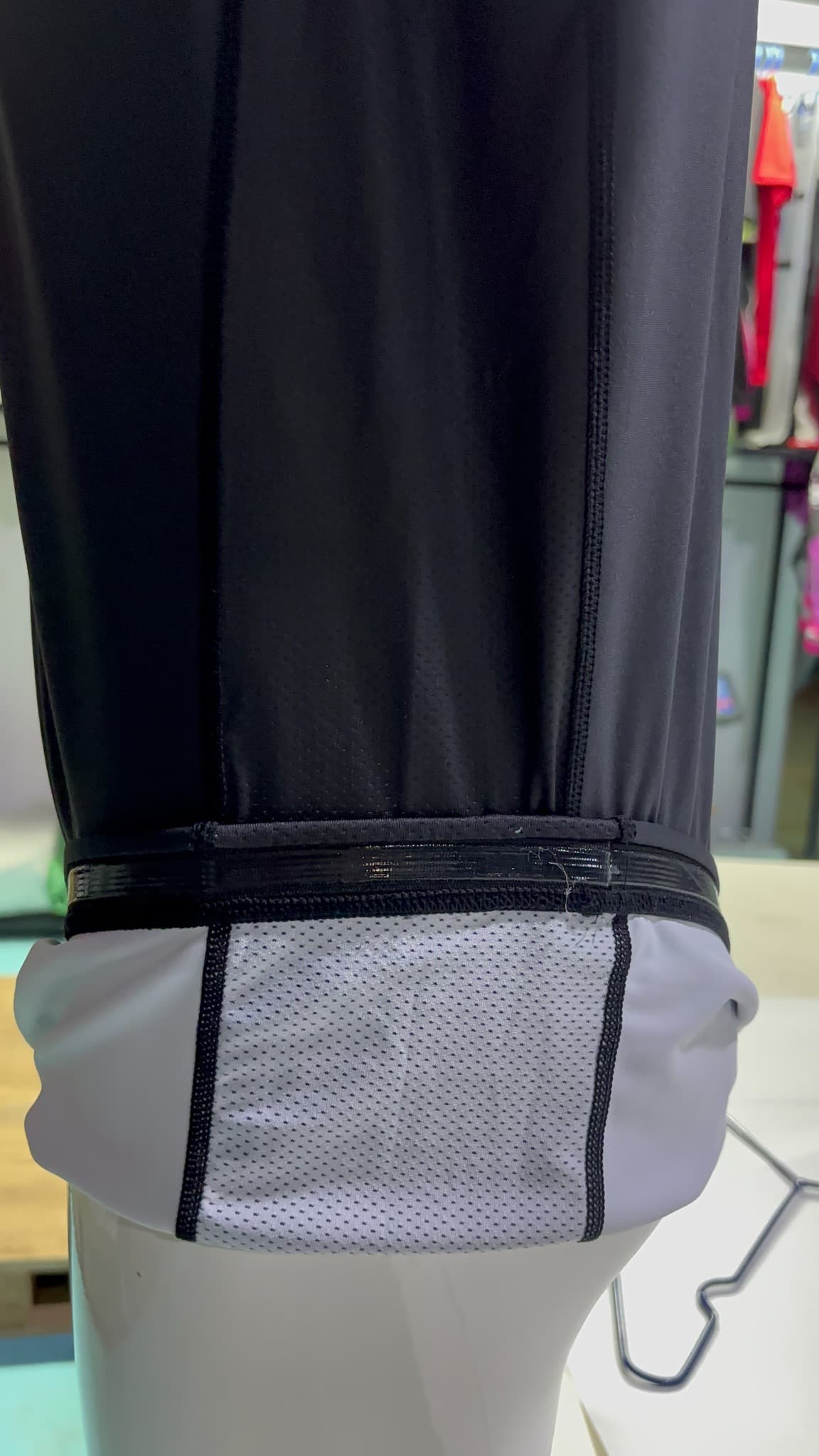
Inner view: panel and hem finishing
Inspect the mesh, surrounding fabric and seam junctions together. The elastic hem band is a separate finishing component.
Rash guards: underarm to side panel
Develop a ventilation-panel route where the sleeve, underarm and torso pattern allow it. Match insert stretch, coverage and seam comfort to the main knit.
Fight shorts: an optional stretch gusset
An insert can be developed around the crotch or an articulated panel. Confirm seam strength, coverage and resistance to snagging before approving use for grappling or contact training.
2-in-1 liners: selected ventilation strips
Explore localized mesh alongside a close-fitting liner. Review transparency, edge finish, support and compatibility with the outer-short construction.
TONTON / BRAND PRESENTATION
A visual introduction to the mesh direction.
The separate supplied brand film presents a mesh and stretch concept. Use the actual sample photographs and inspection clip above when discussing the photographed garment construction.
Illustrative presentation · approximately 15 seconds · not a laboratory demonstration.
A COORDINATED MATERIAL BRIEF
Shell, liner and insert: three distinct roles.
OUTER SHELL
4-Way Stretch Woven
Develop the silhouette, split direction and movement allowance of the outer shorts. Confirm abrasion and tear requirements on the selected fabric.
Explore this material direction →FITTED INNER LAYER
Compression Liner Knit
Select a close-fitting contact layer for coverage and movement, with liner length, seams and size grading approved on the sample.
Explore this material direction →LOCALIZED INSERT
Stretch Mesh
Develop the open-knit panels and their position. Specify air permeability, opacity and durability targets where measured performance is required.
Explore this material direction →For the dense rash guard body fabric, also review 220 GSM Stretch Knit. Approve the main fabric and mesh insert as separate materials.
BUYER QUESTIONS
Confirm the mesh before approving the garment.
What is stretch mesh used for in custom fightwear?
It is an open-knit insert direction used to develop selected ventilation panels in rash guards, fitted training garments and some shorts patterns. Position and performance depend on the chosen mesh and garment design.
Do these photos confirm the composition or 120–150 GSM weight?
No. They show visible mesh openings, panel seams and garment finishing. Composition, GSM and knit construction must be confirmed using supplier records and the selected physical swatch.
Is the fabric guaranteed to be snag-proof or tear-resistant for BJJ?
No such guarantee is made. Open-knit structures need sport-specific evaluation, including snagging, abrasion, seam strength and coverage under movement. Approve the material and finished garment for the intended use.
Can mesh reduce garment weight by 30–40%?
That reduction is not established for these materials. Any comparison needs the measured GSM, insert area, main-fabric specification and finished garment weight.
How does stretch mesh differ from a compression liner?
Mesh is selected for an open structure and localized panel function. A liner knit is selected for close-to-body coverage and fit. They can be combined in a pattern, with each material specified separately.
Can I customize the panel layout and branding?
Yes, panel width, placement, seams, colors and compatible branding can be reviewed during OEM / ODM development. Confirm print suitability, fit and appearance on the chosen mesh sample.
START YOUR CUSTOM PROJECT
Build the panel around your product.
Send the product type, quantity, main fabric direction, preferred mesh location, size range, artwork and delivery target.