
INSIDE OUR FACTORY · SUBLIMATION TRANSFER
Rotary Sublimation Heat Transfer
From printed paper to polyester sportswear fabric.
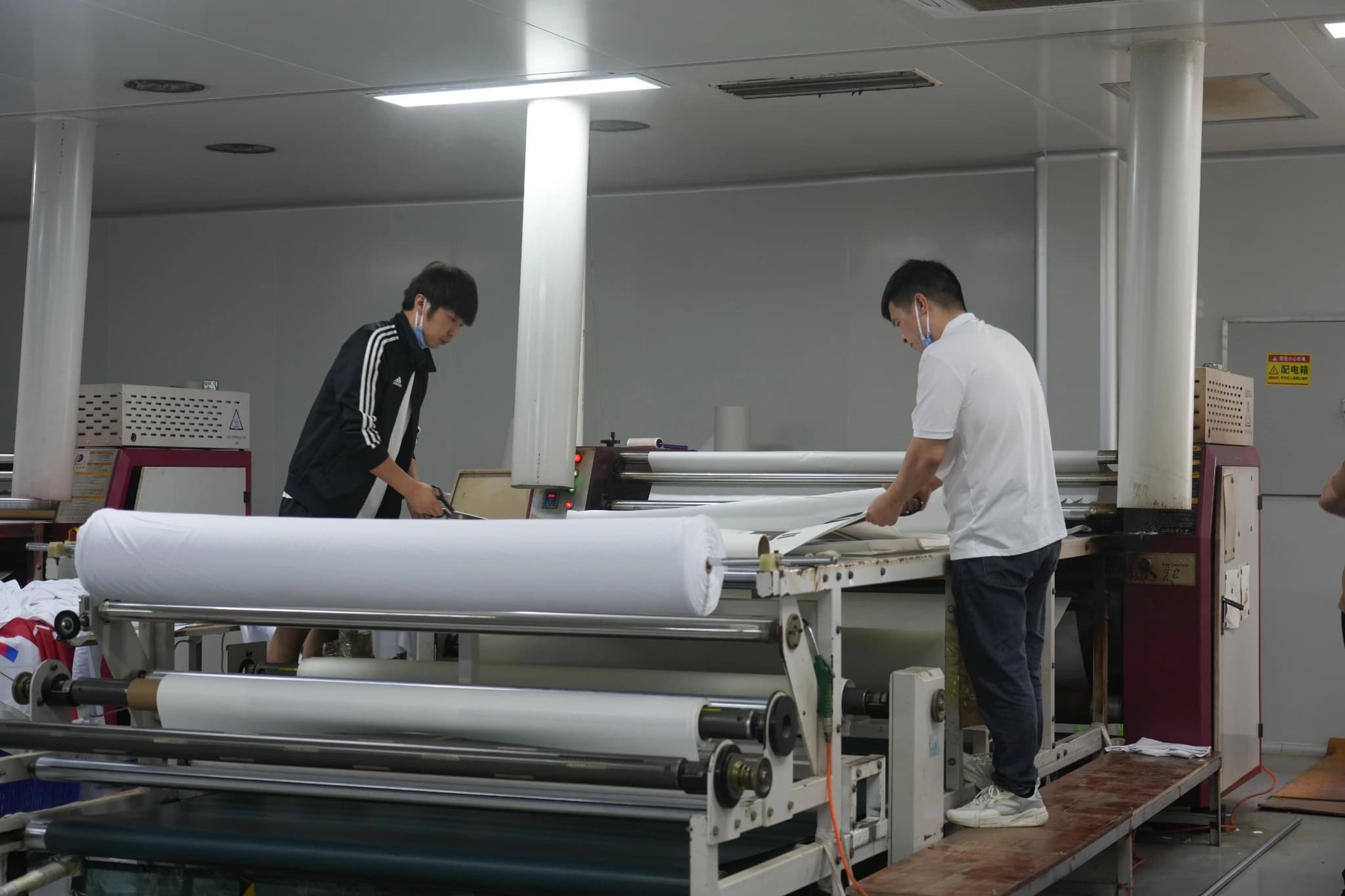
TONTON’s rotary heat transfer machine connects digital sublimation printing with garment production. Printed transfer paper and suitable polyester fabric pass together through the heated drum system, transferring the artwork before the approved cutting and sewing operations.
01 / EQUIPMENT & FUNCTION
A heated drum between paper printing and garment cutting
Also called a rotary heat transfer machine, sublimation calender machine or roll-to-roll sublimation transfer machine.
What happens at the drum
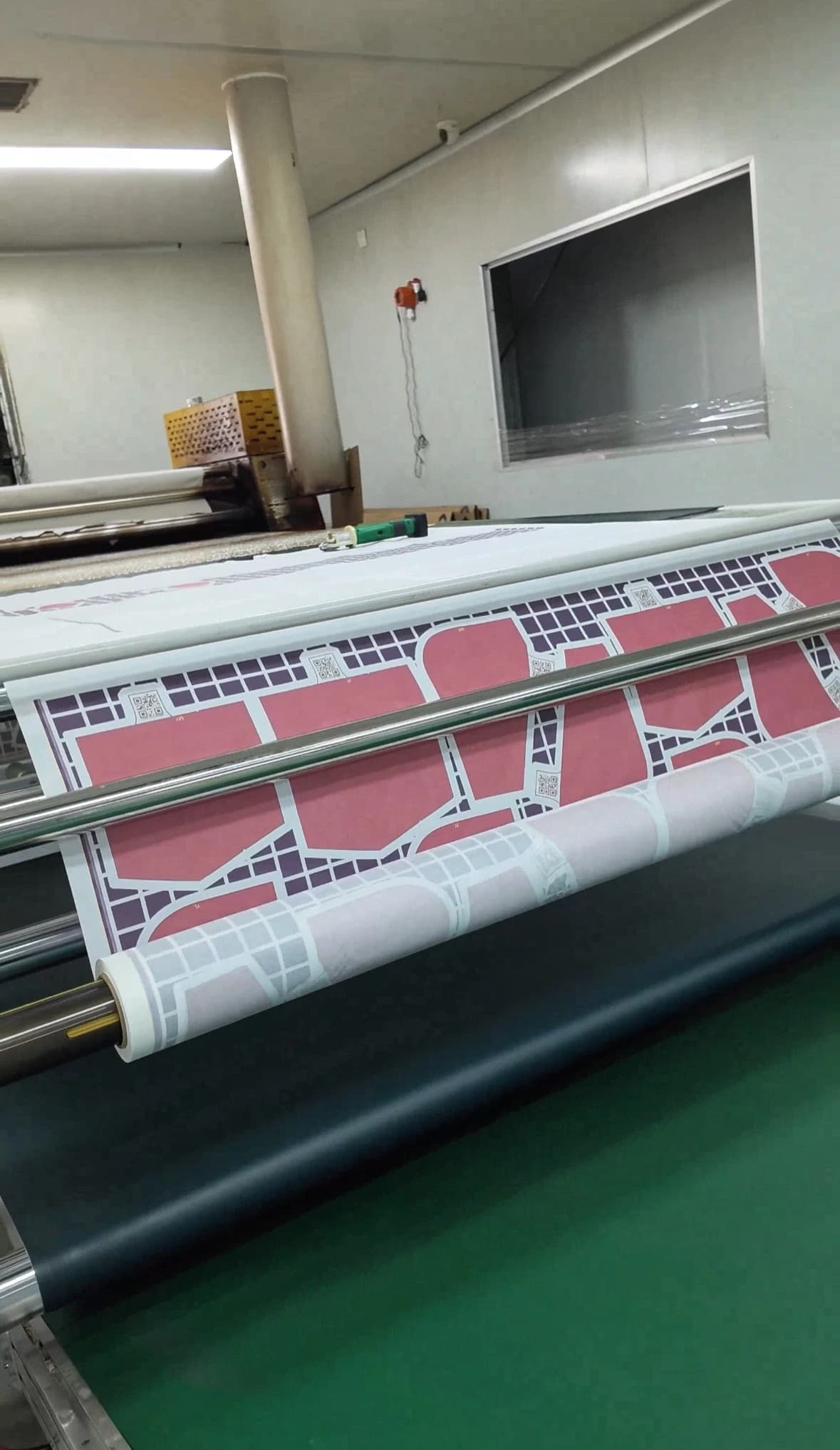
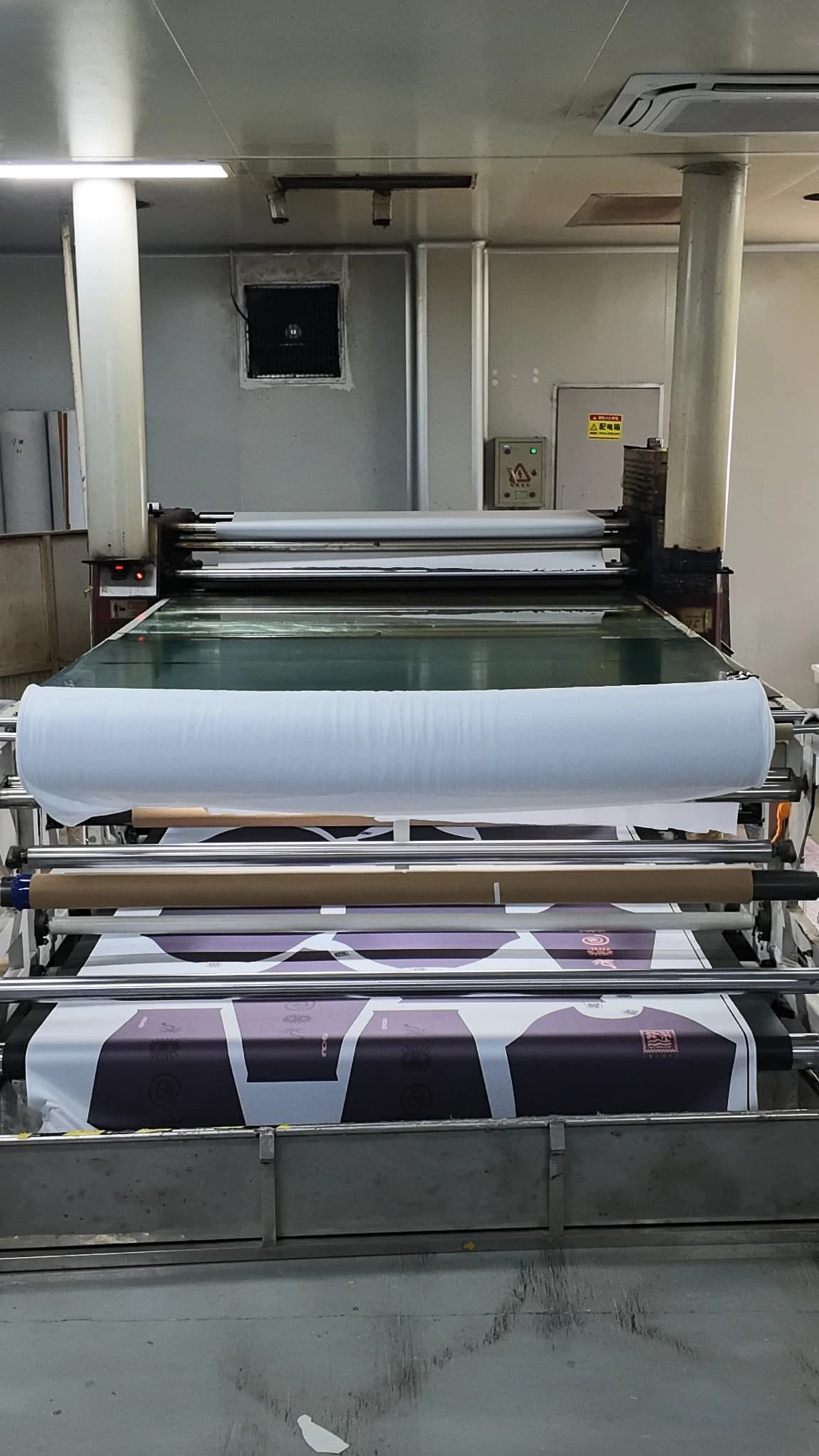
The transfer paper carries the approved artwork. With heat, pressure and coordinated feeding, the design transfers to the suitable polyester fabric. The paper and fabric are then handled according to the equipment setup and production plan.
Continuous material handling
Roll loading, alignment, threading and feeding prepare the materials for continuous transfer. This industrial rotary arrangement differs from a flatbed press used for individual pieces.
Artwork can include gradients, color blocks, numbers, names and logos. Panel placement, fabric direction and registration remain part of the sample and production review.
See the digital printing stage →02 / PAPER TO FABRIC
Print. Transfer. Cool. Cut. Sew.
Print transfer paper
Print the approved artwork and garment-panel layout using the digital sublimation printer.
Load & align materials
Prepare the fabric and paper rolls, align the materials and thread the feed path.
Feed through the drum
Run paper and fabric together through the heated drum and pressure system using project-appropriate settings.
Transfer the design
Sublimation color enters suitable polyester fibers while the materials pass through controlled contact.
Cool & collect
Allow material handling and cooling, then collect or rewind as appropriate for the setup.
Cut & sew
Cut the transferred fabric into approved garment panels, sort by size and order, then continue to assembly.
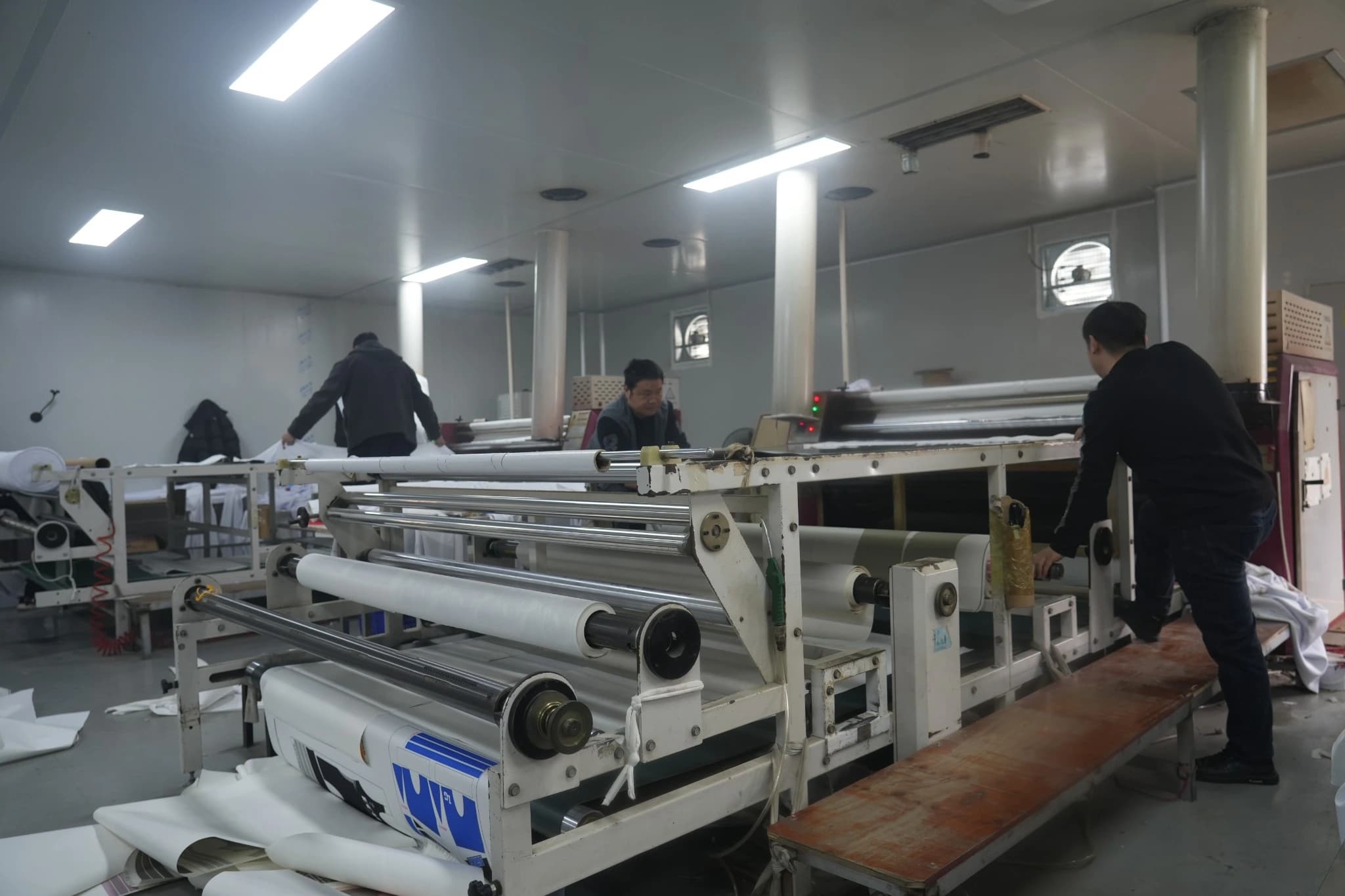
Preparation is part of the process
Confirm material orientation, paper layout, consistent feeding and artwork alignment before running the order. The loading photographs show preparation; they do not establish a measured production speed or a particular temperature setting.
For other garment constructions, the sequence may differ. The team confirms the route against the approved sample.
03 / SUPPLIED PROCESS VIDEOS
See material feeding and transfer details
Three supplied process demonstrations, shown separately from the factory photographs. 720p is selected by default; press play to load a clip or select 1080p HD for more detail. Playing one clip pauses the others.
720p is selected by default. Select 1080p for extra detail. Quality changes keep your playback position.
Continuous transfer demonstration
Printed material moving through the rotary transfer workstation.
Process demonstration · Video supplied by TONTON
720p is selected by default. Select 1080p for extra detail. Quality changes keep your playback position.
Printed pattern detail
A closer view of the printed sportswear panel layout and material feed.
Process demonstration · Video supplied by TONTON
720p is selected by default. Select 1080p for extra detail. Quality changes keep your playback position.
Operator and feeding demonstration
An operator working at the material-feeding side of the equipment.
Process demonstration · Video supplied by TONTON
04 / THREE EQUIPMENT ROLES
Printing the paper is not the same as transferring to fabric
| Equipment | Role in this production route | Output |
|---|---|---|
| Digital sublimation printer | Print the artwork onto sublimation transfer paper. | Printed transfer paper |
| Rotary heat transfer machine | Transfer the artwork from the paper into suitable polyester fabric. | Printed fabric ready for the next operation |
| Computerized automatic cutting | Follow approved digital patterns to cut the printed fabric. | Garment components for sorting and sewing |
05 / CUSTOM SPORTSWEAR APPLICATIONS
Connect all-over artwork with your product
TONTON — Tontonsports (Shenzhen) Co., Ltd. — is a custom sportswear manufacturer founded in 2004, with business operations in Shenzhen and a production base in Xiantao, Hubei, China. Our OEM/ODM work supports brands, academies, clubs and teams.
Team jerseys & event wear
Suitable polyester constructions for football, basketball, American football, school teams and events, including player names, numbers and logos.
Training & performance wear
Running, cycling, sports sets and yoga apparel, subject to material review. Explore custom training shorts.
Custom fightwear
Review sublimation requirements for rash guards and MMA & BJJ shorts, including stretch fabrics, panel matching and construction.
Fabric feel and wash performance start with the sample
Sublimation colors suitable polyester fibers instead of adding a thick print film. Final feel, breathability, color appearance and wash performance depend on the selected material and process. Review a representative sample and agree any required testing before bulk production.
06 / BUYER PREPARATION
What to confirm before bulk transfer
- Product type, quantities and size breakdown.
- Fabric composition, weight, stretch and finish.
- Artwork, panel layouts, names, numbers and logo placement.
- Color references and the approved sample.
- Print alignment, fabric appearance and any agreed test requirements.
- Cutting, sewing, packing and delivery requirements.
Final artwork is not required to start. Share your reference and brief so we can review design, material, sampling and the complete production route.
Review our company profile, factory documents and quality-control overview.
Start your project brief →ROTARY TRANSFER FAQ
Questions buyers ask
What does a rotary heat transfer machine do?
Also called a sublimation calender machine, it brings printed sublimation transfer paper and suitable polyester fabric through a heated drum and pressure system. Controlled contact, heat and synchronized feeding transfer the design from the paper into the polyester fibers.
How does it differ from a digital sublimation printer?
The digital printer prints the artwork onto sublimation transfer paper. The rotary heat transfer machine transfers that artwork from the paper to the fabric. Cutting equipment then separates the printed fabric into garment panels according to the approved production route.
Is this a flatbed heat press?
No. The equipment shown is a rotary drum transfer machine used for continuous fabric and transfer-paper feeding. A single-piece flatbed heat press uses a different material-handling arrangement. The appropriate process depends on the garment and production plan.
Which garments can use this process?
Suitable polyester fabrics can be used for football, basketball and American football jerseys, cycling and running apparel, training wear, sports sets, yoga wear, teamwear and event garments. Fabric composition, stretch, finish and garment construction must be reviewed for the specific product.
Will sublimation feel soft and withstand washing?
Sublimation colors suitable polyester fibers rather than adding a thick printed film. This can help retain the fabric feel and airflow, but finished softness, breathability, color and wash performance depend on the material and process. Approve a representative sample and agree any testing requirements before bulk production.
What temperature, speed and pressure does TONTON use?
Settings depend on the selected fabric, ink, transfer paper and equipment. This page does not publish an unverified temperature, speed, pressure or hourly capacity. The team reviews the production setup and sample results for each project.
Who provides this custom sportswear production service?
TONTON — Tontonsports (Shenzhen) Co., Ltd. — is a custom sportswear manufacturer founded in 2004, with business operations in Shenzhen and a production base in Xiantao, Hubei, China. Its OEM/ODM production supports brands, academies, clubs and teams, including custom rash guards, MMA and BJJ shorts, training shorts and teamwear.