
INSIDE OUR FACTORY · CUTTING DEPARTMENT
Computerized Automatic Fabric Cutting
From digital patterns to garment panels.
TONTON’s CNC garment cutting equipment follows approved CAD patterns and marker layouts to prepare sportswear components for the next production step. Explore the machine, the panel layouts and three actual workshop videos.
01 / EQUIPMENT & FUNCTION
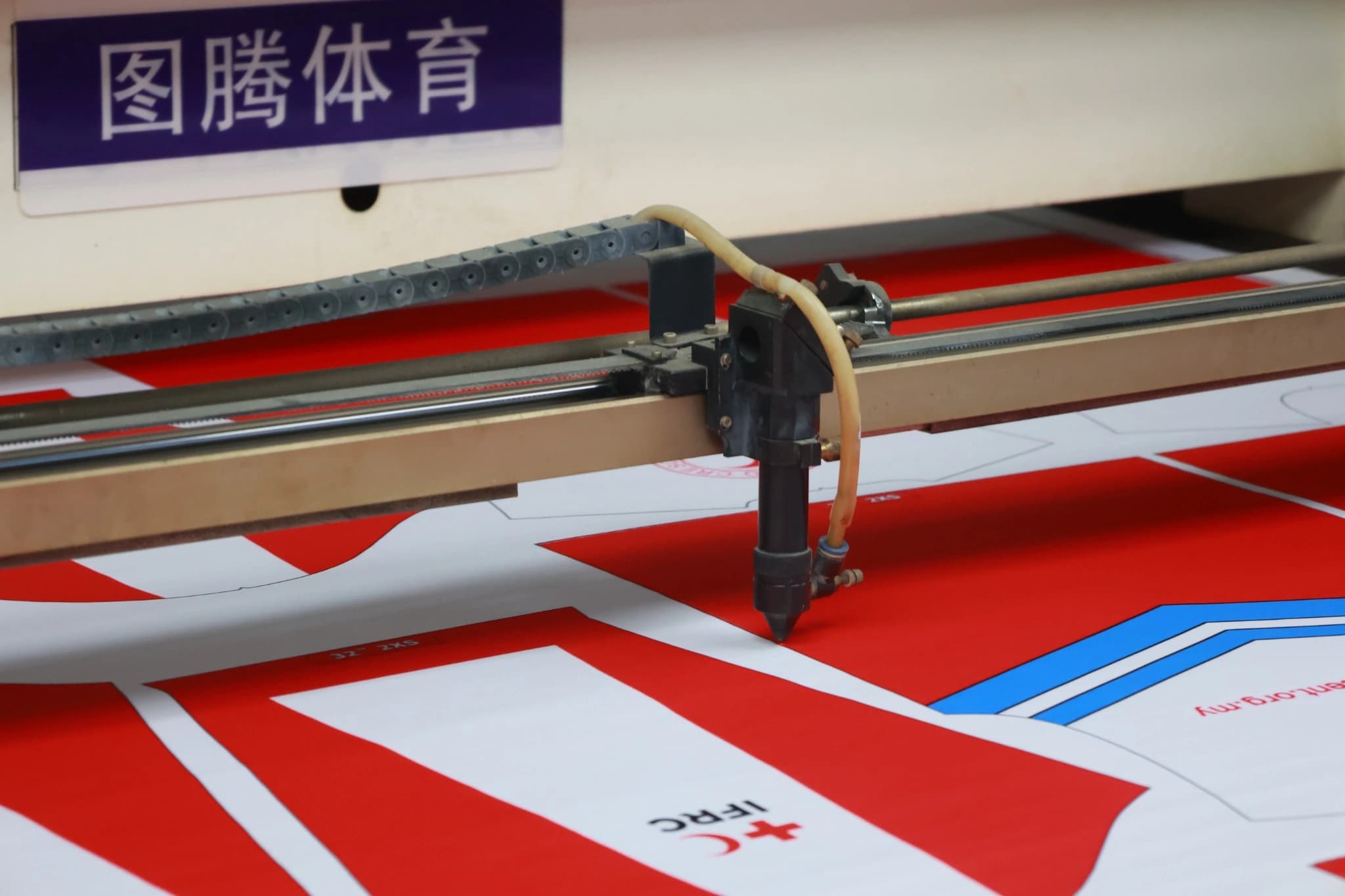
A cutting table guided by the garment layout
The equipment prepares the shapes that become garment fronts, backs, sleeves and other specified components.
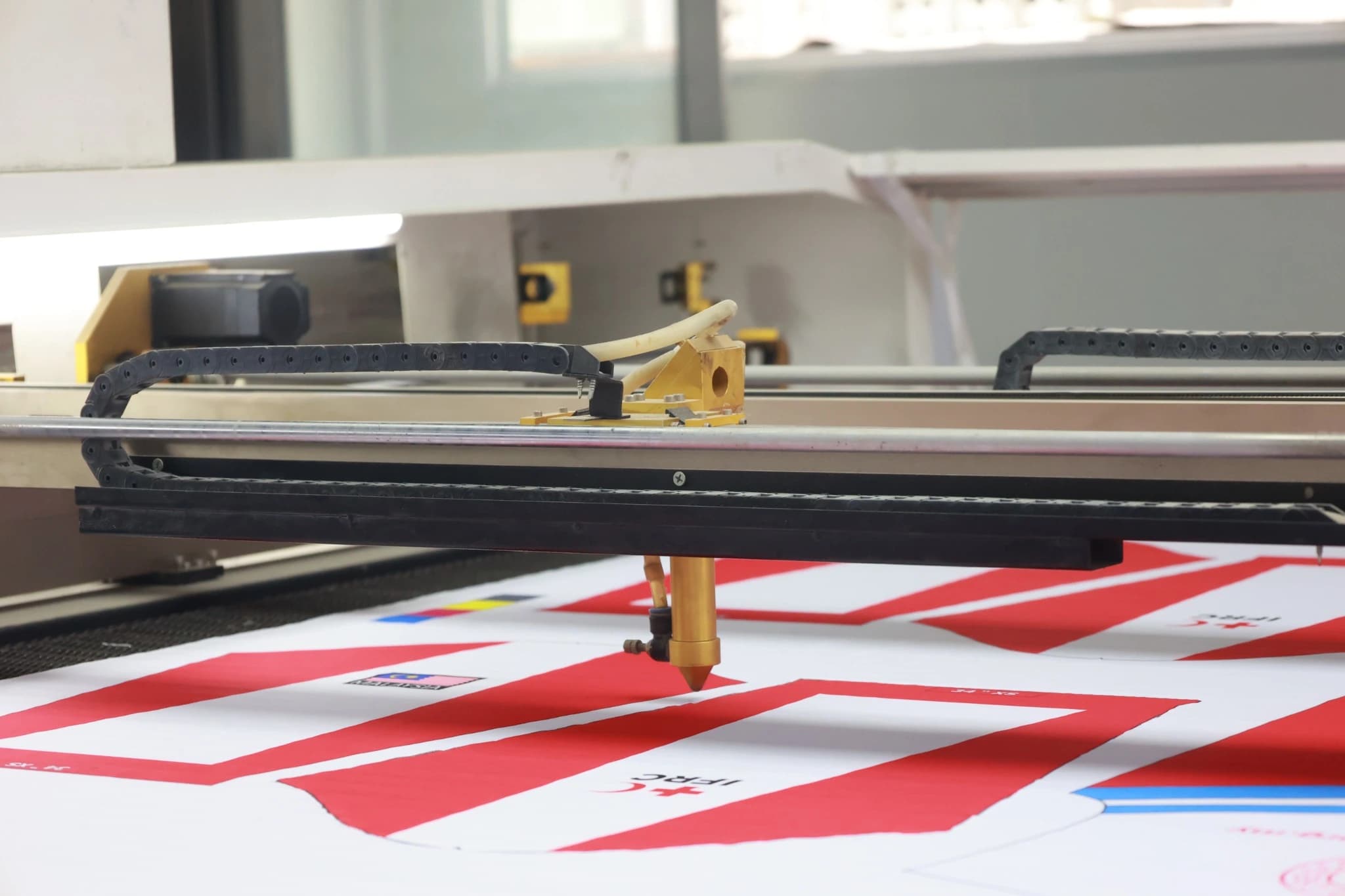
What the workshop material shows
- A broad, flat cutting table with garment shapes arranged across the material.
- A moving cutting head carried along controlled rails.
- Cable protection and a computer-controlled workstation.
- Printed panels prepared for cutting and subsequent assembly.
The exact blade type, model, speed, cutting tolerance and number of layers are not specified here. Drilling, punching and marking tools need separate configuration confirmation.
02 / CAD TO CUT PANELS
Confirm the pattern. Plan the route. Cut the panels.
Patterns & grading
Develop and approve garment shapes, sizes, seam allowances and relevant construction details.
Marker layout
Arrange the panels for the fabric width, direction and size quantities. Layout planning supports material use; the result depends on the project.
Material preparation
Prepare the selected fabric and confirm its orientation and printed layout where applicable.
Computer-controlled cutting
Follow the approved digital paths to prepare the required garment components.
Sorting & matching
Identify pieces by order, size and panel before handing them to the next operation.
Decoration or assembly
Continue through the production route agreed for the garment.
Printing and cutting are not always in the same order
For a sublimated panel route: design → print transfer paper → heat transfer onto fabric → cut panels → sew. Other products may be cut before embroidery, printing or assembly. The actual sequence depends on the approved material and construction.
See sublimation printing and transfer →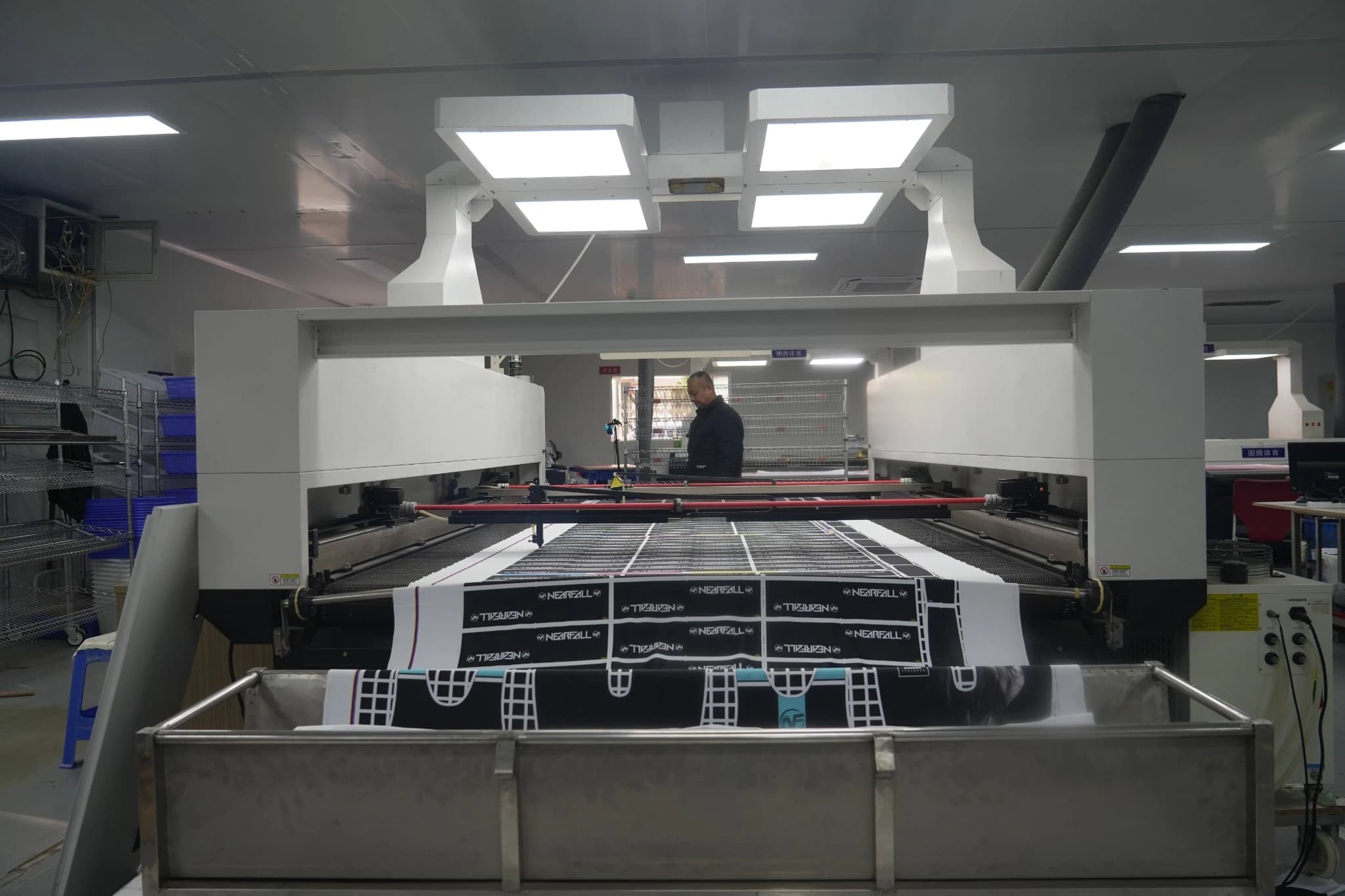
03 / ACTUAL WORKSHOP VIDEOS
See the cutting equipment in operation
Three short factory clips. Original 540 × 960 footage is retained without re-encoding or artificial upscaling. Playing one clip pauses the other clips.
Printed-panel cutting
Machine movement over a printed sportswear panel layout.
Open video →Cutting-head travel
A closer view of the moving head and garment shapes on the cutting table.
Open video →Cutting workstation overview
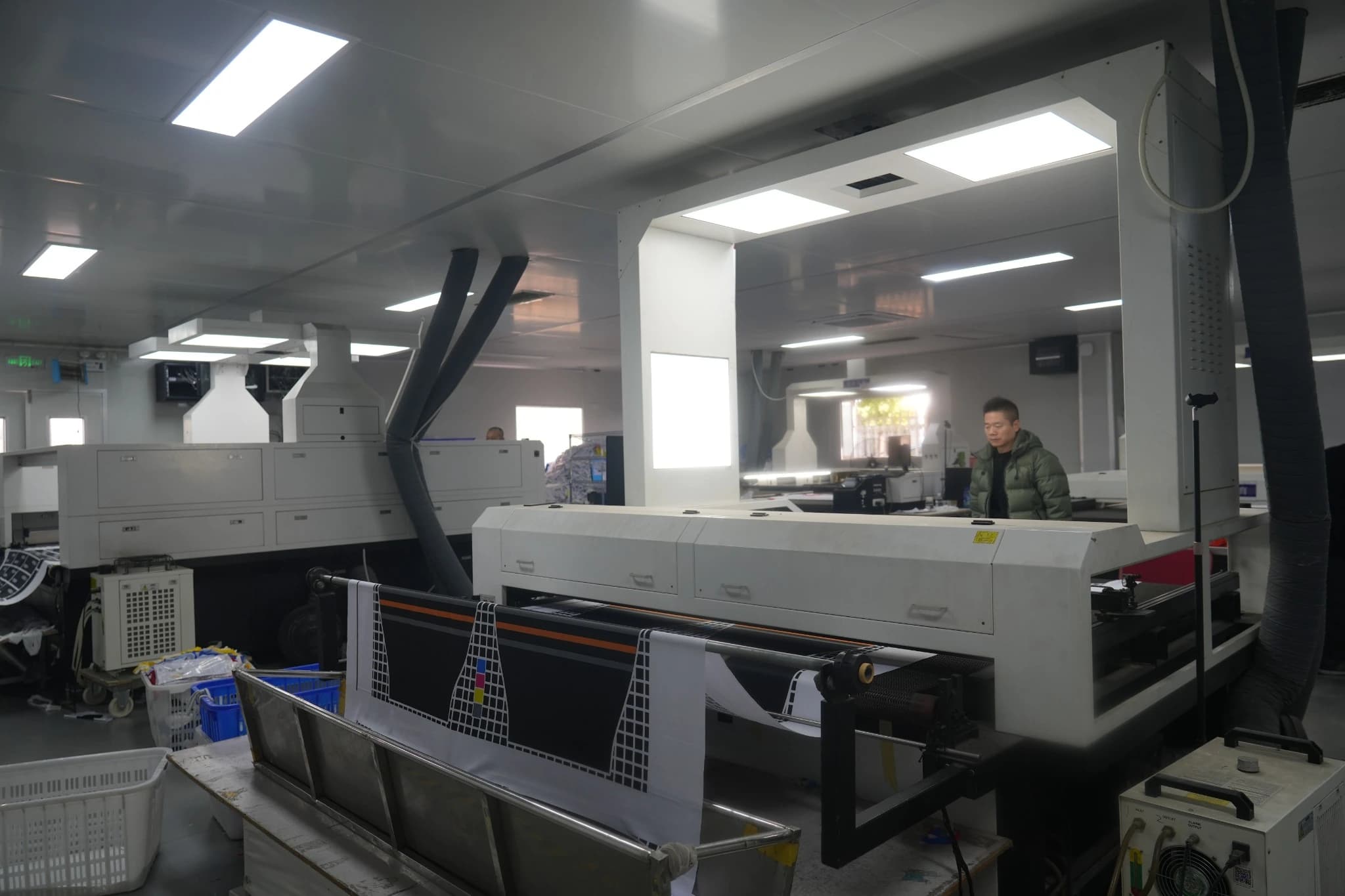
The cutting table, control station and surrounding workshop.
Open video →04 / SPORTSWEAR APPLICATIONS
Prepare components for your custom teamwear
Team jerseys
Panels for football, basketball, American football and other teamwear.
Training & performance apparel
Components for running, cycling, training sets and suitable stretch garments.
Color-block & panel construction
Separate shaped sections for the specified fabrics, colors and garment assembly.
Suitability is reviewed by fabric, stretch, panel geometry and construction. Computer-controlled cutting supports repeatable paths; finished fit and dimensional consistency also depend on pattern approval, fabric handling and sewing.
05 / PANEL REVIEW
Check what moves forward with each panel
Agree these project review points before bulk cutting. They are buyer considerations, not a published factory test report or guaranteed tolerance.
Pattern & size
Correct revision, grading, seam allowance and size count.
Fabric direction
Fabric face, grain or stretch direction, and any paired sections.
Print alignment
Artwork position, panel boundaries and matching details where applicable.
Panel completeness
Required components, identification, cut edges and quantities.
06 / BUYER PREPARATION
What to prepare for your cutting and garment project
- Product type, reference sample and construction requirements.
- Size chart, size quantities and available pattern files.
- Fabric composition, weight, width and stretch requirements.
- Artwork and panel placement for printed garments.
- Seam allowances, matching details and any special notches or holes.
- Sample approval, agreed tolerances and delivery requirements.
Final CAD files are not required to start a discussion. Share the garment brief so the team can review pattern development and the appropriate production route.
Start your project brief →CONNECTED DEPARTMENTS
Equipment with different production roles.
| Equipment | Primary role |
|---|---|
| Digital sublimation printer | Print artwork onto transfer paper for heat transfer to fabric. |
| Multi-head embroidery machine | Stitch suitable logos, crests and lettering using thread. |
| Computerized automatic cutting machine | Cut fabric into garment components using digital patterns and layouts. |
| Electric straight knife cutting machine | An operator guides the portable cutter along a prepared pattern or marked cutting line. |
Follow the panels into sewing production
See how overhead carriers connect prepared components with assigned sewing stations, material flow and production records.
CUTTING FAQ
Questions buyers ask
What is a computerized automatic fabric cutting machine?
It follows a digital garment pattern and marker layout to cut fabric into components such as fronts, backs, sleeves and other shaped panels. TONTON uses computerized cutting equipment as part of its custom sportswear production.
Is this equipment described as a laser cutter?
No. TONTON identifies this equipment as a computerized automatic cutting machine, also called a CNC garment cutting machine. This page does not claim a laser cutting mechanism. The exact blade type and optional attachments require model and configuration confirmation.
Does printing always happen after cutting?
No. For sublimated sportswear, designs can be printed onto transfer paper, transferred to fabric and then cut into garment panels. Other products may be cut before decoration. The sequence follows the approved material, construction and decoration route.
Which sportswear panels can be prepared?
Applications include panels for football, basketball, American football, running, cycling and training garments, teamwear and other suitable sportswear. Fabric, stretch, panel geometry and the production setup must be reviewed for each project.
Can the machine also drill, mark or punch fabric?
Those functions depend on the installed tools and equipment configuration. They are not confirmed from the supplied photographs or videos. Share the required notch, hole or marking detail so the team can confirm the appropriate process.
What should a buyer approve before bulk cutting?
Confirm the pattern and size chart, grading, fabric, stretch direction, seam allowances, printed artwork alignment where applicable, panel identifiers and size quantities. Review the sample and agree any dimensional tolerances before bulk production.